



Interview with Emmanuel Garcion
https://crci2na.univ-nantes.fr/medias/photo/emmanuel-g-photo-2-3_1789466233232
A look back at ‘Mai en gris’, Brain Tumour Awareness Month, with Emmanuel Garcion, Research Director at CRCI2NA. He talks about his career, his motivations and his research, particularly into glioblastoma, the most common and aggressive form of brain tumour in adults.
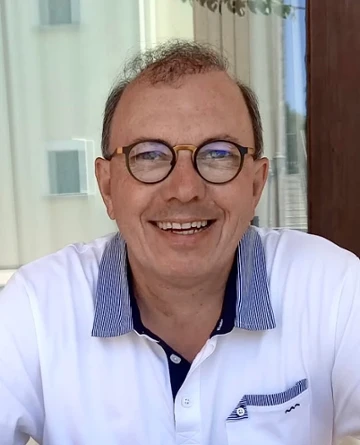 Could you introduce yourself in a few words? What inspired you to become a researcher?
I am an Inserm Research Director at the Nantes - Angers Cancer and Immunology Research Center (CRCI2NA). Ever since I was a child, I have been fascinated by living organisms and the diversity of the mechanisms that enable them to function. Very quickly, this curiosity was accompanied by an interest in the ‘discovery’ aspect, and I naturally developed a desire to become a researcher.Looking back at my career path, I trained as a neurobiologist. I studied cellular and molecular biology and physiology, followed by neuroscience at Paris VI. After my PhD, I went to Cambridge for a postdoctoral fellowship, where I focused on the development of the central nervous system: the brain and spinal cord. Gradually, my interest broadened to include brain disorders: understanding how the brain develops, why things stop functioning normally, and how we can intervene.
What led you to focus on brain tumours?
It was the therapeutic aspect that drew me to oncology. Brain tumours, which affect the seat of our consciousness, emerged as a natural extension of my career as a neurobiologist, particularly as several mechanisms involved in brain development are also hijacked or reactivated in cancers.My career path has led me to work for just over nine years at CRCI2NA on the ‘Design and implementation of innovative loco-regional treatments for glioblastoma’, which is the name of the team I lead.
What is your research currently focused on?
Our research focuses on glioblastoma, an aggressive form of brain cancer in adults. At CRCI2NA, we work on so-called loco-regional therapeutic approaches, that is, the development of strategies designed to act directly on the identified tumour site. Our work is organised around two main areas:
- targeted radiotherapy – which involves delivering radionuclides directly to the tumour to concentrate the radiation locally and optimise the therapeutic effect,
- interventional implants, which enable local intervention in the tumour microenvironment to modulate its biological characteristics.
The aim is to better target the residual disease that persists after surgery and which is responsible for relapses.
What are the main challenges currently facing research into brain tumours?
One of the main challenges is the heterogeneity of tumours. Tumour profiles can vary greatly from one patient to another. Added to this is the way the disease evolves over time. Understanding and treating these tumours remains a major challenge for research. Every breakthrough helps to advance treatments. This underlines the importance of research and knowledge-sharing so that we can continue to make progress together in tackling these conditions.
How do you view the future of research?
Research will remain a deeply collaborative endeavour. It requires different disciplines to work together: doctors from various specialisms, biologists, chemists and physicists. It is at the interface between these disciplines that the most interesting breakthroughs may well emerge.This collaborative aspect is not limited to theory and is fully reflected in exchanges with the various stakeholders in healthcare and research. I also took part in the event organised in Angers by the Institut de Cancérologie de l’Ouest (ICO) as part of ‘Mai en Gris’, a day dedicated to brain tumours, to present the team’s work. Charities, neurosurgeons, radiotherapists and healthcare professionals were present for presentations and discussions.
What drives you every day?
What guides me is the desire to give meaning to what we do. Beyond what we think we understand, research is only worthwhile if it can, in the long run, improve patient care.

Updated on 15 September 2026.